
If you have water damage with mold in your Edina home, act fast and work safely. This guide shows what to do first, how to dry without spreading spores, when DIY is reasonable, and when to call a pro. It also covers insurance steps that help Edina families get back to normal quickly.
Water Damage With Mold: What To Do Now
Mold needs moisture and time. After a leak or flood, growth can begin within 24 to 48 hours. Start by protecting your health, stopping the water, and isolating the affected space. EPA’s homeowner guide explains that fixing moisture is the key to prevention and cleanup. See the EPA brief guide to mold and moisture.
Safety And PPE
Use disposable gloves, eye protection, and an N95 respirator. Keep kids and pets out. If the area is large or the air feels musty through the whole level, treat the problem as significant and plan for professional help. CDC provides clear safety steps for small-scale cleanup. Review the CDC mold clean-up recommendations.
Stop The Water And Stabilize
Shut off the supply to leaking fixtures. If a sump pump failed, restore power safely or use a temporary pump. Move dry belongings out. Place foil or plastic under furniture legs to prevent staining. Do not turn on central HVAC that could pull spores through the house. The Minnesota Department of Health advises investigating and correcting moisture first, rather than spending on testing. See MDH’s guidance on mold and moisture in homes.
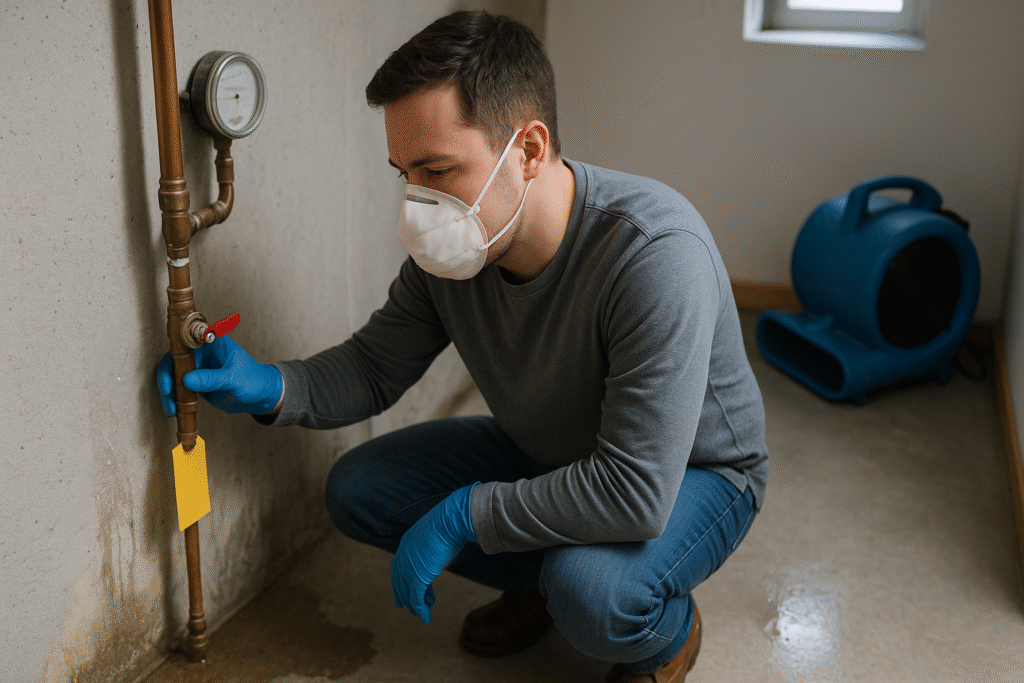
Show a simple action shot. Emphasize safe PPE and water shutoff to stop the source.
DIY Or Pro In Edina? A Simple Decision Tree
Use this quick guide. If any answer is “yes,” call a pro:
Call a pro if: the affected area is bigger than a standard closet, there is visible mold on porous materials like drywall or carpet across multiple spots, there is sewage or suspected contamination, someone in the home has asthma or is immunocompromised, or the smell is present on an entire level. For small, non-porous areas you can follow basic steps from EPA and CDC. Edina homeowners can also consult MDH’s advice to focus on moisture control and source removal, not unnecessary testing. Review MDH’s mold and moisture brochure.
Drying Without Spreading Mold
Remove standing water first. Bag and remove loose debris. For small areas with visible mold, wipe hard surfaces with detergent and water before any disinfectant. Run a dehumidifier to maintain low humidity. Position air movers so they do not blow directly across visible mold, which can spread spores. The EPA notes that fixing leaks and drying fully are essential steps. See EPA’s mold cleanup tips for homes.
In basements common to Edina split-levels, concentrate on rim joists, utility rooms, and corners where cool surfaces condense. Keep doors to unaffected rooms closed. Vent exhaust air outdoors if possible. If odors increase when fans run, pause air movement and reassess containment.
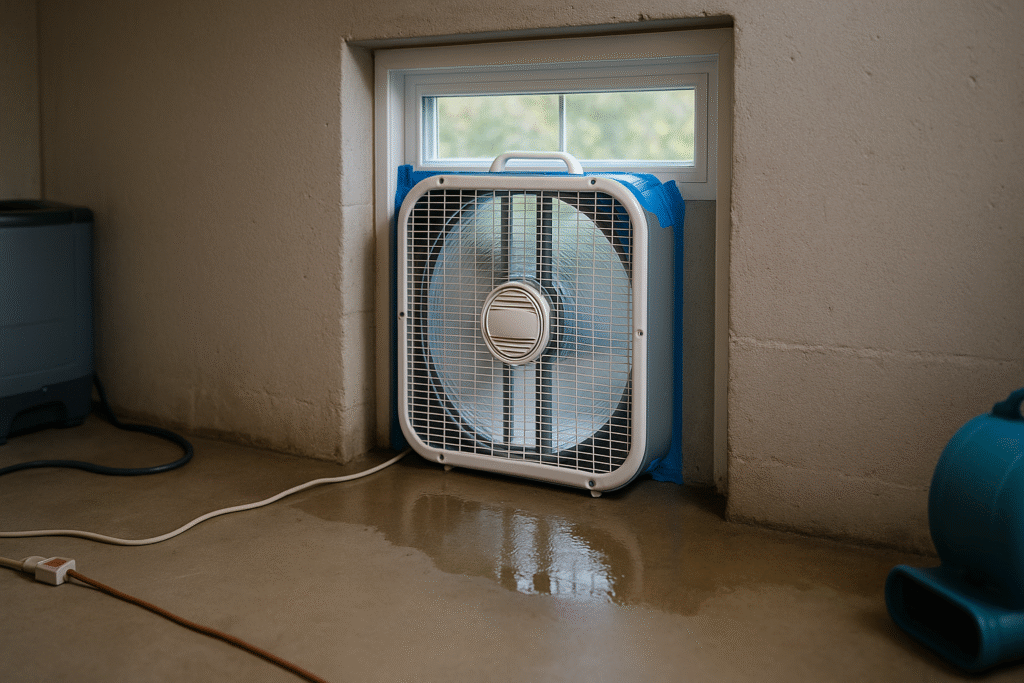
Depict a controlled exhaust path so air does not push spores into clean rooms.
Materials: What To Keep, What To Toss
Keep: Non-porous items like metal, glass, and sealed plastics after cleaning with soap and water. Toss: Water-logged carpet pad, swollen particleboard, and moldy paper-faced drywall. For drywall with spotting, removal to the nearest stud bay is usually best. CDC and EPA advise cleaning first with detergent, then disinfecting where appropriate, and always drying completely. Read CDC’s Homeowner and Renter mold cleanup guide.
Avoid: Spraying bleach on porous materials. It can leave moisture behind and may not reach roots in drywall or wood. Focus on removal of damaged porous items and thorough drying. Use bagging and gentle handling to limit dust.
Insurance And Documentation In Edina
Take wide shots, then close-ups with a ruler for scale. Photograph the shutoff, failed part, or ice dam path. Save receipts for pumps, fans, filters, and contractor visits. Notify your carrier quickly. Many Edina basements sit near the Nine Mile Creek watershed, so ask about coverage limits when groundwater is involved. The NFIP and public guidance stress prompt removal of water and sanitizing to avoid further damage. See FEMA’s recovery guidance on rebuilding safer and stronger after floods.
Prevent The Next One In Edina
Check for ice dam risks each winter. Add or improve attic insulation and air sealing to reduce melt-and-refreeze. Test your sump pump before spring thaws. Add a battery backup pump. Extend downspouts away from foundations in Morningside and Pamela Park where lots are tight. EPA’s brief guide reinforces ongoing moisture control as the best prevention. See the EPA moisture prevention guidance.
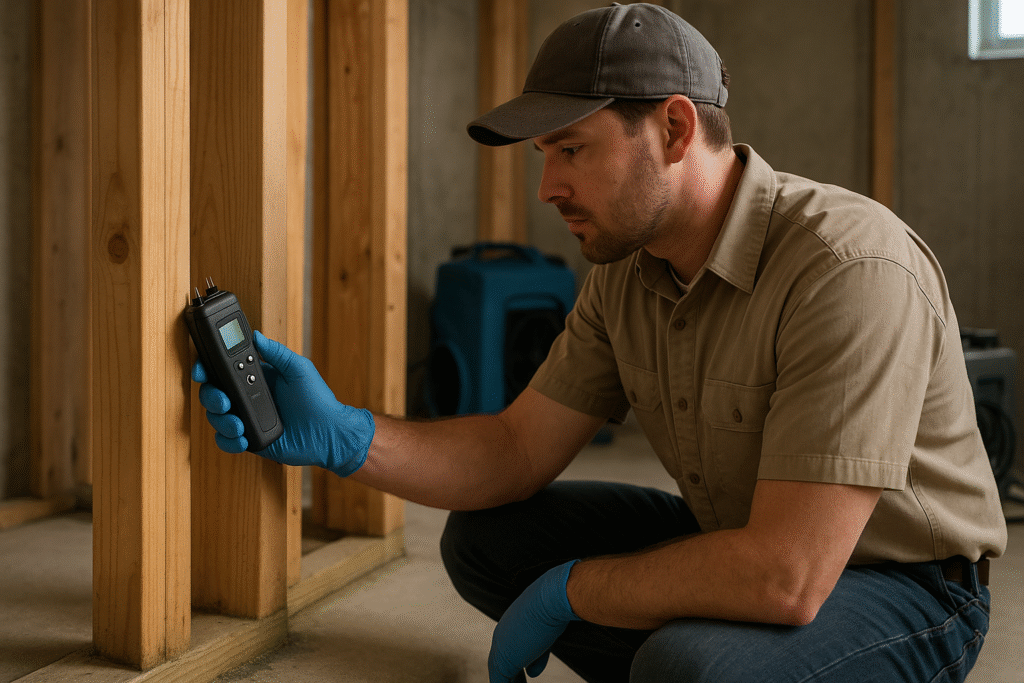
Show measurement that confirms materials are dry before rebuild.
When To Call A Pro In Edina
Choose a firm trained to ANSI/IICRC standards for water damage and mold remediation. Ask about containment, negative pressure, and clearance criteria. If the area is large, if odors persist after drying, or if sensitive occupants are present, schedule professional service. Learn about the IICRC standards framework for restoration.
Quick DIY Checklist For Small Areas
1) Wear N95, gloves, and eye protection. 2) Stop the water. 3) Isolate the area. 4) Remove standing water. 5) Clean hard surfaces with detergent and water. 6) Run a dehumidifier until materials are dry. 7) Re-inspect after 24 to 48 hours and adjust.
FAQ
Is it safe to stay if there is visible mold? For small areas with no vulnerable occupants, you can often stay while you clean and dry. If the odor fills a floor, or someone is at higher risk, relocate or call a pro and follow CDC safety basics.
Do I need a test before cleanup? MDH advises to focus on moisture and visible mold removal rather than spending on testing. If there are dispute or health concerns, a consultant may help, but correction of the moisture and damage is the priority.
Can I run fans right away? Yes for initial water removal, but do not blow across visible mold. Start with dehumidification and controlled airflow. If odors worsen, stop and reassess containment.
Recommended articles
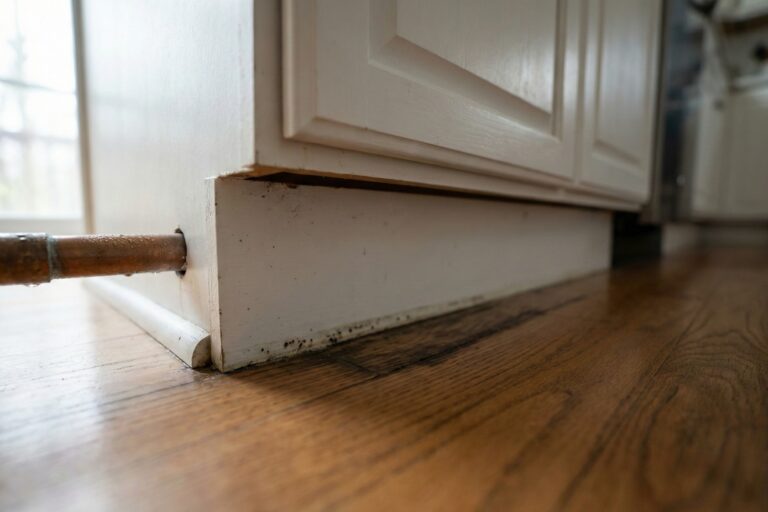
Kitchen Leak Mold Traps That Make Minnetonka Beach Families Overpay
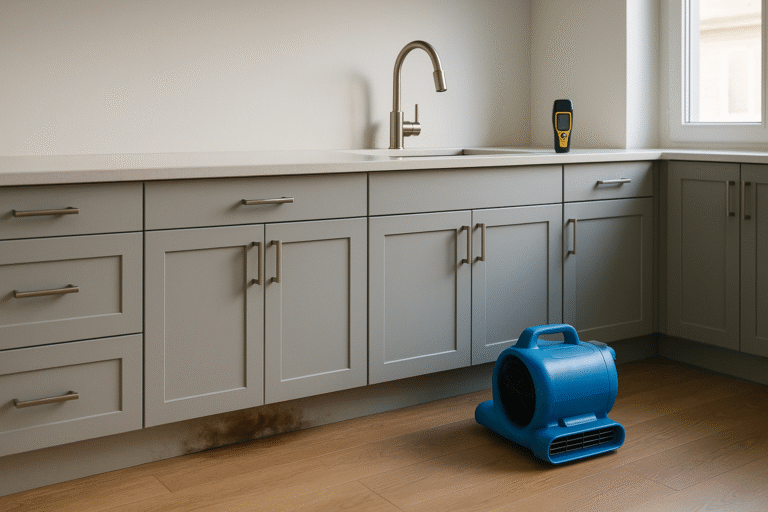
A slow kitchen leak can quietly grow mold, trigger real mold health risks, and open the door for exaggerated bids and confusing insurance advice. This guide shows you how to protect your family’s lungs and your wallet with a clear kitchen mold action plan and scam-proof checklist.
Inside The Mold Remediation Process After A Kitchen Leak: St Louis Park Homeowner Guide
A slow kitchen leak can turn into a hidden mold problem in just a few days. This step by step guide walks you through what a professional mold remediation process looks like in a wet kitchen, how to spot bad contractors, and when to call a local pro for help.
How Eden Prairie Homeowners Can Avoid A $10,000 Mold Problem In The First 24 Hours After Water
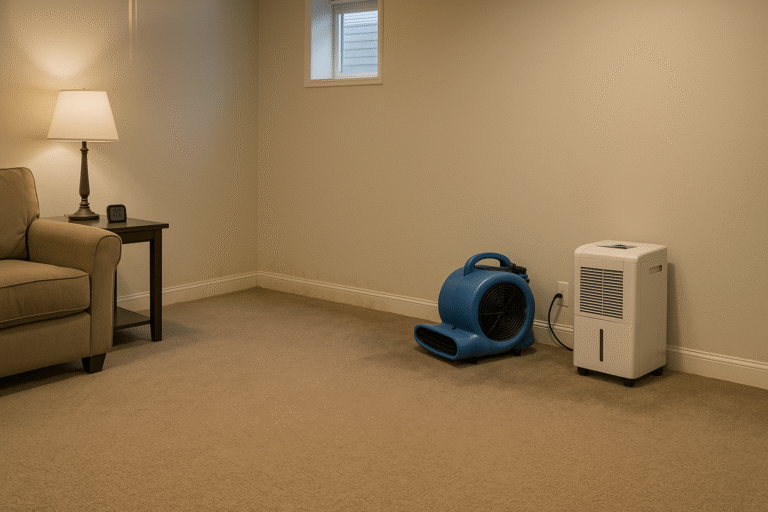
A Friday night sump pump failure leaves a finished basement soaked and a family worried about both money and health. This case study walks through the first 24 to 72 hours after water damage, how fast mold and costs can climb, and what smart steps protect your home, kids, and pets.