
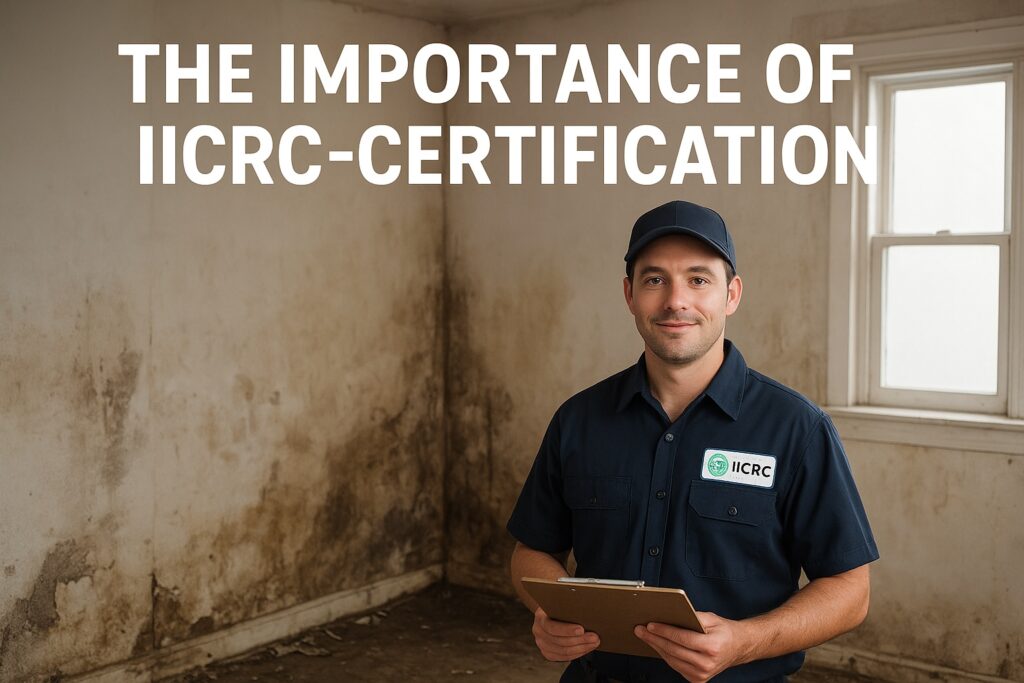
What the Certification Means: A Reliable Benchmark
The key phrase here is **IICRC-certification** in its broad sense—it refers to work by technicians certified by the Institute of Inspection Cleaning and Restoration Certification (IICRC). A certified technician has completed formal training and passed exams in one or more restoration or cleaning specialties. According to material published by the IICRC and industry commentary, the organization defines standards, confers credentials and requires ongoing education to maintain them. IICRC is recognized as America’s national standards-writer in cleaning and restoration — this helps you as a homeowner pick a trustworthy service.
Because many states (including Minnesota) do *not* regulate restoration work with the same licensing regimes as plumbing or electrical trades, you might find providers who lack formal credentials. That’s why the IICRC credential helps you identify someone who has committed to standards beyond the minimum. Certified firms complete multi-day training and annual refreshers, meaning the team working on your home is up-to-date with the latest methods.
Why It Matters for Your Home in Minneapolis
Your Twin Cities home faces unique challenges: freeze-thaw cycles crack foundations, heavy spring snowmelt backs up drains, and older homes in neighborhoods like Lowry Hill, North Loop or Linden Hills often have legacy materials like knob-and-tube wiring or plaster walls. When damage strikes—say from basement flooding in a heavy April thaw—the difference between patching visible water and properly drying, remediating and protecting hidden structural elements is significant.
Better Risk Control and Long-Term Protection
An IICRC-certified restoration technician is trained in moisture measurement, structural drying and contamination awareness. For example, they will monitor humidity/temperature with instruments and follow procedural standards to ensure materials are properly dried before closing walls or ceilings. Without this rigor you face a risk of hidden mold growth or structural deterioration later. Certification signals firms who follow safety protocols and industry standards.
Insurance and Resale Benefits
Insurance companies and real-estate buyers often look more favorably on restoration work done by certified firms. Why? Because certified firms document what they did, follow recognized protocols, and reduce chances of hidden damage that later becomes your expense. If you later sell your home in neighborhoods like Edina or Minnetonka, you’ll benefit from having used a pro who followed recognized credentials.
Consumer Confidence When Time Matters
In Minneapolis when a burst pipe hits at 2 AM, you don’t want to wait. A firm that advertises 24/7 response and lists IICRC credentials provides peace of mind. Trained technicians know to check for secondary damage (e.g., wall cavities, sub-floors, insulation) rather than stop at surface dryness. That kind of thoroughness pays off in less chance of repeat issues.
When to Call a Pro in Minneapolis
Signs you should call a certified restoration specialist now
If your home in the Audubon Park area, Shorewood or Bloomington shows any of these signs, it’s time to call a restoration pro (and look for IICRC credentials):
- Standing water or rapid spread of moisture after damage (burst pipe, sump pump failure, basement seepage).
- Unusual odors or visible mold growth after a flood or leak—especially penetrated drywall or carpets.
- Structural changes that follow water exposure: sagging ceilings, warped floors, peeling paint upstairs.
- A pending insurance claim where you need documented evidence of damage, drying or remediation work.
When faced with such conditions, a certified technician brings tools and knowledge to map moisture, dry structural assemblies and protect your home’s integrity. Acting quickly helps contain damage and cost.
What Certification Covers—and What It Doesn’t
It’s important to know what IICRC certification indicates—and where you still need to ask questions.
What It Covers
IICRC offers a variety of certifications. Some common ones include:
- WRT (Water Damage Restoration Technician) – for damage from water intrusion.
- AMRT (Applied Microbial Remediation Technician) – for mold remediation.
- FSRT (Fire & Smoke Restoration Technician) – for fire, smoke and soot cleanup.
These credentials show that the technician completed coursework, hands-on training and passed an exam. Article notes certification signals specialized knowledge and ongoing education.
What It Doesn’t Cover Automatically
Certification doesn’t guarantee everything. For example:
- It doesn’t replace local business licensing or permits—check Minnesota state and city requirements.
- It doesn’t mean you’ll get the lowest cost; quality work can cost more than shortcuts.
- It won’t fix a poor hire decision—vacancy of the actual company’s workmanship still matters.
Therefore you should still check the firm’s experience in Minneapolis-area properties, inspect references, and ask for proof of insurance and firm certification (in addition to individual technician credentials).
How To Choose an IICRC-Certified Firm in Minneapolis
Selecting the right restoration partner matters. Here are practical steps:
Ask to see the IICRC Certified Firm logo – Both the technician and the company should be listed.
Verify specific certifications – If your damage is water-related, ask if the crew includes WRT or ASD (Applied Structural Drying) certified technicians.
Check local references – Ask for recent jobs in suburbs like Maple Grove, Eagan or Woodbury.
Ask about moisture-mapping and documentation – A serious firm uses meters, logs and shares reports with you and your insurer.
Clarify insurance-claim support – Especially in flood or storm events, a firm that knows working with insurance adjusters helps things go smoother.
Ensure responsiveness – Especially in Twin Cities climate, timing is key (frozen basements, thaw cycles). A certified firm should mention rapid dispatch.
Read the contract – Confirm hours, equipment, final dryness standards, and ask: “What happens if moisture remains after you leave?”
By following these steps, you ensure your home is in capable hands, not just “someone who shows up with a truck.”
Step-By-Step Homeowner Checklist After Damage
Use this checklist to guide your actions when damage occurs—and know how a certified team fits in.
- Shut off source of damage (water valve, weather seal, ice-dam vent) and document the event with photos.
- Contact your insurance agent and take initial photos of damage in areas such as basement, drywall, flooring.
- Call a restoration firm that lists IICRC certification. Ask what technicians are certified and what procedures they follow.
- During initial visit, ensure the firm conducts a full assessment: moisture meters, infrared, possible mold/humidity concerns.
- Ensure equipment stays in place until readings meet dry-standard criteria. Ask for final report and documentation.
- After drying, ask the firm for remediation plan: repairing or replacing damaged materials, ensuring structural integrity and finishing.
- Keep all invoices, logs and photos—these support insurance claims and protect you during resale.
FAQ
How long does IICRC certification last?
Technicians must take continuing education to maintain certification. The exact time and credits vary by credential. This ensures they stay current with industry best-practices.
Does hiring an IICRC-certified firm cost more?
Typically yes—because you’re paying for trained technicians, documented processes and professional equipment. But that upfront investment often saves money by avoiding hidden damage, mold regrowth or failing inspections.
Is certification required by Minnesota law?
No. The state does not require IICRC certification as a licensing standard for restoration companies, so certification is a voluntary credential that you should look for as an informed homeowner.
When To Call A Pro In Minneapolis
When damage affects your home and your peace of mind in neighborhoods like Dinkytown, Columbia Heights or Roseville, it’s time to call a professional. Here are key red-flags:
- Rapid moisture intrusion (spring thaw or burst pipe) threatening structural components.
- Visible mold or persistent damp odor despite attempts to dry it yourself.
- Insurance claim complexity, where documentation, logs and standards-based work help the process.
- Older home with legacy material (e.g., plaster walls, older basement construction) that needs expert care to avoid additional damage.
In these cases, hiring an IICRC-certified firm means you’re working with a trained team that understands recovery, documentation and long-term value preservation.
Recommended articles

The Best Ways to Prevent Mold Growth After Water Damage
Prevent Mold Growth Water Damage: what it is, how it happens, and how to prevent or fix it.Prevent Mold Growth Water Damage: what it is, how it happens, and how to prevent…
Fire Safety Tips to Protect Your Home and Family
Fire Safety Tips to Protect Your Home and Family: what it is, causes, fixes, and when to call a pro. When it comes to keeping your home and family safe, fire prevention…
The Top 5 Causes of Water Damage and How to Prevent Them
The Top 5 Causes of Water Damage and How to Prevent Them: what it is, causes, fixes, and when to call a pro. Water damage is one of the most common and…