
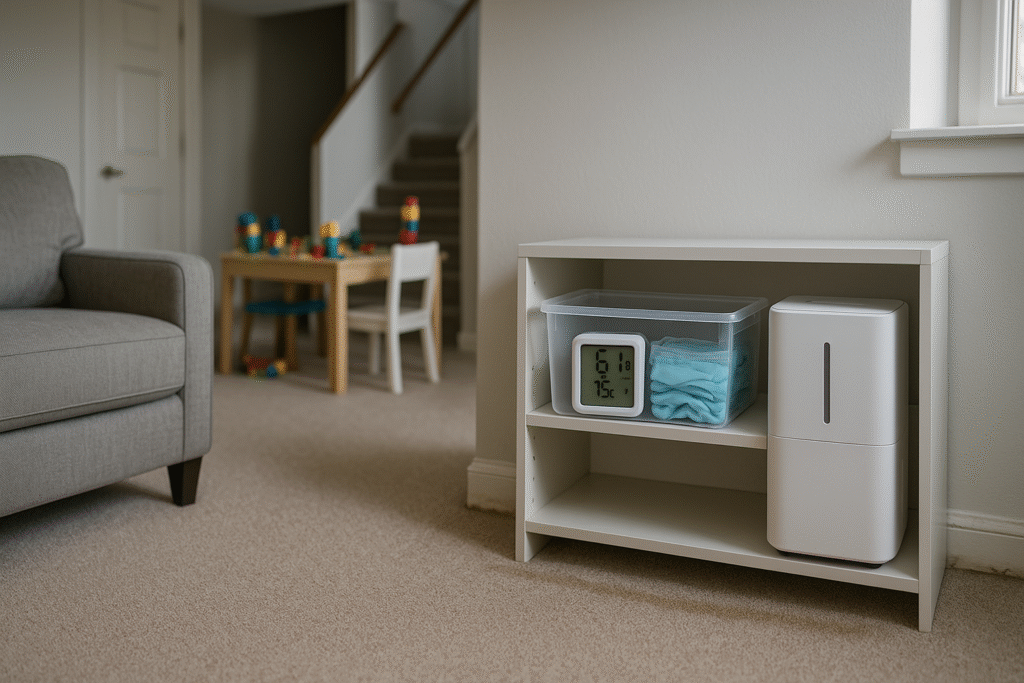
You probably do not think much about basement mold health risks until your family starts feeling off. Picture a week of heavy spring rain near Lake Minnetonka, the lake level running high, and everyone spending more time in a cozy finished lower level. The kids watch a movie on the sectional, laundry hums in the corner, and somewhere behind the drywall a slow seep is feeding mold you cannot see. A few weeks later the basement smells musty, your chest feels tight every time you walk downstairs, and a child’s cough never quite goes away. It is unsettling because you cannot tell whether it is just seasonal allergies or something inside your home that is quietly making everyone miserable.
For one Shorewood family, that was the breaking point. The basement had been their favorite hangout, not a space that triggered headaches, scratchy throats, and sleepless nights worrying about long-term health. Once they finally connected the symptoms to moisture and mold, the mood shifted from panic to determination. They did not have to become mold experts overnight, but they did need a clear way to understand the risks, calm the health fears, and take specific steps that actually made the basement safer.
What Basement Mold Health Risks Look Like In Real Life
Basement mold rarely announces itself with a dramatic scene. It usually starts with little things that are easy to ignore. Maybe the air feels heavier when you get to the bottom step, or there is a faint earthy smell near a storage wall that you can clear temporarily with a scented candle. Over time those clues line up with more worrying patterns, like family members feeling better after a weekend away and worse again once everyone is back in the lower level.
Early Warning Signs In A Finished Basement
In a finished basement, the first signs of trouble are often comfort issues rather than obvious spots of mold. The floor may feel cool and slightly damp through your socks, especially along exterior walls or near a walkout door. Cardboard boxes in a storage closet might sag at the bottom, and a wooden toy chest or bookshelf can start to swell along its base. You may notice rust on the bottom of metal chair legs or storage shelves sitting directly on the slab.
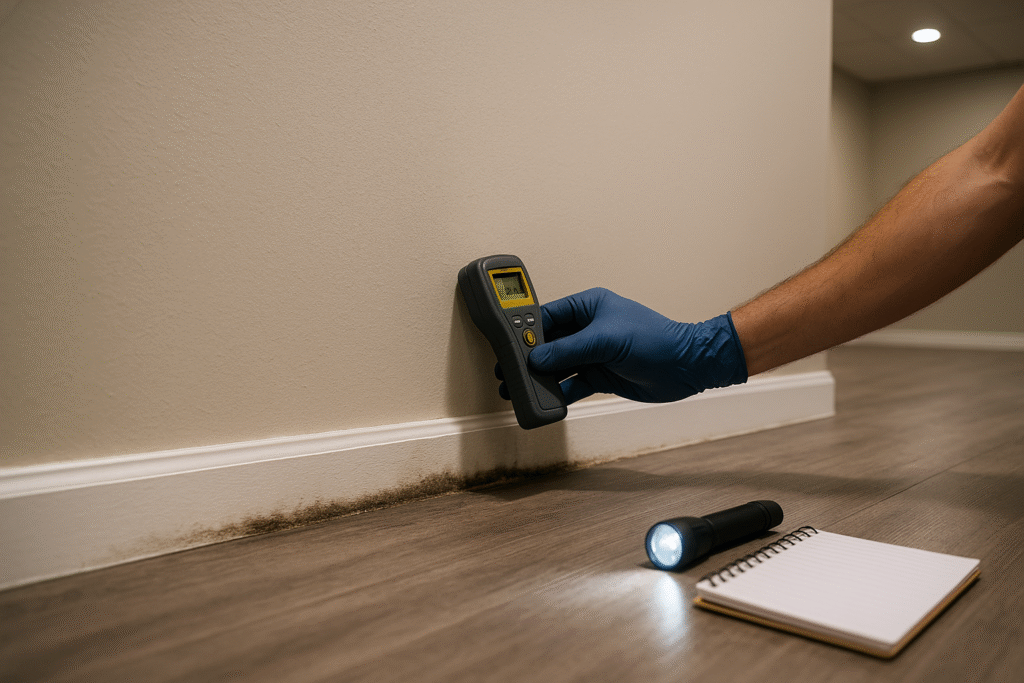
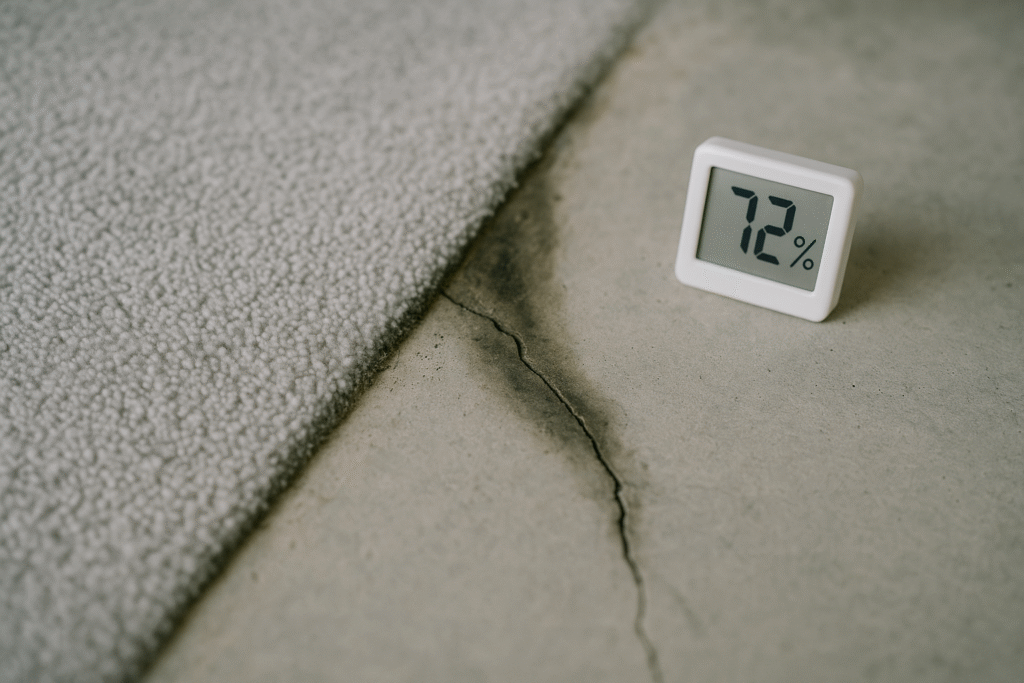
Visual clues can be subtle. Look for a faint tide line on baseboards where the paint looks uneven or slightly darker. Check the junction where carpet meets tile or concrete for shadowy edges or a dusty, gray-green fuzz appearing along tack strips. Pay attention to smells as much as sights. A musty odor that is stronger after a rainstorm or when the dehumidifier has not been running is a big hint that moisture is lingering in places you cannot see.
How Dampness Turns Into Invisible Mold
Mold spores are always floating in the air, indoors and out. They are usually not a big problem until they land on something damp and stay wet long enough to grow. In a finished basement, water from seepage, foundation cracks, a clogged exterior drain, or a tired sump system can soak carpeting, drywall, or the back side of paneling. Those materials do not need to look soaked. Even a slightly damp wall cavity can provide enough moisture for mold to colonize paper-faced drywall, wood framing, and carpet padding.
Once mold establishes itself behind finishes, it can grow for weeks while the visible surface looks nearly normal. Maybe there is a small discolored patch in a closet or behind a couch that no one moves very often. Meanwhile, the damp materials release spores and musty odor compounds that move through the rest of the basement and sometimes into upper levels through open stairwells or ductwork. That is when health questions start creeping in for the family that spends time in the space.
How Basement Mold Affects Your Body And Stress Level
When you suspect mold, the health worries often feel bigger than the water problem itself. It is one thing to mop up a puddle. It is another to wonder whether your child’s breathing issues are connected to nights spent on the basement couch. Understanding what mold can and cannot do to your body makes it easier to decide how urgent the problem is and what kind of help you might need.
Common Symptoms That May Be Linked To Damp Basements
Health effects from mold vary from person to person. Many public health and lung organizations note that exposure to damp, moldy indoor air can trigger or worsen allergy and asthma symptoms, and can irritate the eyes, nose, throat, and lungs even in people without known allergies. The American Lung Association explains that mold exposure can contribute to coughing, wheezing, nasal congestion, and asthma attacks, especially in people who already have respiratory conditions. American Lung Association information on mold and health
In everyday basement life that can look like a nagging cough that improves at work or school, sinus pressure that flares after time in a musty room, or a tight chest when you exercise on a treadmill downstairs. Some family members may have no noticeable symptoms at all while others feel run down, which is part of what makes mold-related health questions so confusing. Symptoms are often similar to a lingering cold, so it is easy to underestimate the role that indoor dampness might be playing.
Who Is Most Vulnerable In Your Household
Not everyone reacts to mold the same way. Children, older adults, and people with asthma, allergies, or other chronic lung issues are usually more sensitive to damp indoor environments. Someone with well-controlled asthma might begin using their rescue inhaler more often when they spend time in a musty basement. A child with seasonal allergies may suddenly seem to have “year-round” symptoms that never fully clear.
Anyone with a weakened immune system also deserves special care around mold and moisture. If someone in your home is going through chemotherapy, taking immune-suppressing medications, or has a serious lung disease, even moderate mold problems can be a reason to move their sleeping and living areas away from the damp space while you sort out the building issues. Health guidance in this area is general by nature, so when symptoms are persistent or severe it is important to talk with a healthcare professional who can look at the full picture for your family.
Finding The Source In A Finished Basement
You cannot protect your family’s health if moisture keeps returning to the same hidden spots. That is why every health conversation about basement mold eventually comes back to one question. Where is the water actually coming from, and how often does the basement get damp? The Minnesota Department of Health emphasizes that controlling moisture is the most important step in preventing mold, more important than any particular cleaner or air freshener. Minnesota Department of Health mold and moisture guidance
For Shoreline and low-lying homes near areas like Freeman Park or along Minnetonka Boulevard, that might mean a combination of groundwater pushing in at the slab edge, exterior grading that slopes toward the house, and gutters that dump water too close to the foundation. In other homes the culprit is closer to home, such as a disconnected downspout, a leaking hose bib in a walkout area, or a sump discharge that freezes or backs up during late winter thaws.
Checking Drains, Slabs, And Sump Pumps
Start with the basics. Walk the entire perimeter of the basement and look at the base of each wall. Note any places where paint is flaking, baseboards are swollen, or flooring is cupped, rippled, or loose. Check around floor drains, at the bottom of stairwells, and in storage rooms where boxes or totes may hide stains on the concrete. Use a flashlight to inspect behind furniture that sits close to walls and along the edges of built-in cabinets or entertainment centers.
Next, look at your sump pump and any drainage features. Make sure the pump is plugged in, the float moves freely, and the discharge line carries water well away from the foundation rather than letting it recycle along the wall. If you have no sump system but see damp rings around support posts, cracks in the slab that look wet, or repeated puddles after storms, that is a sign you may need better drainage. Take notes and photos. The goal is not to diagnose everything yourself but to gather clear information about patterns that a contractor or inspector can then interpret.
Testing Humidity And Tracking Patterns
A small digital humidity gauge is one of the simplest tools you can use to protect your family from mold and moisture. Place it at chest height in the basement, away from a supply vent, and check the readings at different times of day and in different weather. Many public health sources recommend keeping indoor humidity below about 50 percent, especially in spaces with a history of dampness. If your basement routinely stays above that, even when the weather is dry, you are more likely to see condensation, musty smells, and future growth.
Keep a simple log for a few weeks. Write down humidity readings, outdoor weather conditions, and whether the dehumidifier or sump pump is running. Note when symptoms like coughing or headaches seem worse and whether that lines up with humidity spikes or recent storms. This simple record turns vague stress into concrete information you can share with a plumber, foundation specialist, or medical provider as you decide what to do next.
Step By Step: What To Do When You Suspect Basement Mold
Once you see the connection between moisture, mold, and how your family feels, the hardest part is knowing what to do first. It helps to think in layers. You begin by protecting people, then you stabilize the building, then you decide how much work you can safely handle on your own. Research on damp homes and health consistently shows that fixing the water and drying materials reduces risk far more effectively than focusing on lab tests or air fresheners alone. Summaries from indoor air quality experts highlight higher rates of cough, wheeze, asthma symptoms, and other respiratory issues among people who spend time in damp or moldy homes, which is why taking action, even in small steps, matters for long-term health. Lawrence Berkeley National Laboratory review of dampness and mold health risks
Immediate Actions In The First 24 To 48 Hours
If you find a clearly damp or moldy area, begin by creating some distance between that zone and everyday living. Close the basement door at night if you can. Move children’s play areas and sleeping spaces upstairs. Avoid running fans that blow directly across visible mold or soggy materials since that can spread spores and debris through the air.
Next, remove things that hold moisture but are easy to replace. Carry out soaked cardboard boxes, throw rugs, and damaged paper items like old books or magazines stored on the floor. Wear disposable gloves and at least a snug-fitting mask rated to filter fine particles. Start controlled drying by running a dehumidifier and, where it is safe, using gentle air movement that does not blow straight at obvious growth. Empty the dehumidifier regularly so it can keep pulling water from the air instead of turning into another source of standing water.
Safer Cleaning Versus When To Stop And Step Back
For many homeowners, a small amount of mold on hard, cleanable surfaces is manageable with careful cleaning. Smooth concrete, metal support posts, and sealed flooring can sometimes be cleaned with detergent and water as long as the underlying moisture problem is fixed. Work in small sections, avoid harsh scrubbing that sends debris airborne, and dry the surface completely when you are done. Keep doors to upper levels closed so particles are less likely to spread into bedrooms.
There are limits to what is reasonable to tackle on your own. If you see mold covering a large continuous area, if it is growing on porous materials like drywall and insulation, or if someone in the home has significant asthma or immune problems, it is safer to pause. That is a good point to contact a professional who has protective equipment, containment materials, and drying tools designed for this kind of work. Trying to rip out contaminated drywall without proper controls can make the air much worse in the short term, which is the last thing you want when your goal is to protect your family.
Seven-Step Checklist To Regain Control
When your mind is racing, a simple checklist can keep you moving in a calm, logical order. Use these seven steps as a quick reference whenever basement moisture or mold pops up again.
- Step 1: Protect people first. Move kids, older adults, and anyone with breathing issues away from the musty area until you understand what is happening.
- Step 2: Look and sniff. Walk the basement, trace where the smell is strongest, and note any visible stains, damp spots, or warped materials.
- Step 3: Check humidity. Place a digital humidity gauge in the basement and log readings at different times of day and after storms.
- Step 4: Find the water source. Inspect gutters, grading, sump pumps, and plumbing near the affected area, taking photos as you go.
- Step 5: Remove easy moisture reservoirs. Discard soaked cardboard, textiles, and damaged items that are inexpensive to replace.
- Step 6: Start controlled drying. Run a dehumidifier, use gentle air movement, and avoid blowing air directly across visible mold.
- Step 7: Decide on help. Compare what you see with your comfort level and any health concerns, then choose whether to continue carefully or call in a qualified restoration contractor.
When To Call A Pro In Shorewood
There is a big difference between wiping a little mildew from a bathroom tile and dealing with a damp finished basement where people spend hours every day. In the Shorewood area, basements often sit close to high water tables and complex drainage patterns near Lake Minnetonka. That makes it more likely that moisture issues will repeat if they are not handled with both health and building science in mind.
Consider contacting a professional if any of the following are true. The musty odor is strong throughout the basement or drifts into main living areas. You see widespread staining, bubbling paint, or visible mold on drywall, insulation, or the back of baseboards. Someone in your home has asthma, chronic lung disease, a weakened immune system, or unexplained symptoms that improve when they are away from the house. You suspect there is hidden damage behind walls, under flooring, or below built-in cabinets that you do not feel comfortable opening up on your own.
A reputable restoration contractor will start by listening to your health concerns, documenting what is visible, and then tracing moisture paths using tools like moisture meters and thermal imaging. They can help you decide whether you need containment, negative air machines, or only targeted removal and drying. A company like Optimized Restoration, based nearby in Excelsior, focuses on clear communication and insurance-friendly documentation so you are not left guessing about what was done or how to explain it to your insurer. The goal is not just to dry your basement but to give you confidence that the space is once again safe for your family to enjoy.
Basement Mold Health FAQs
When you begin connecting health symptoms to a damp basement, a flood of questions tends to follow. The answers below focus on the most common worries homeowners share while they are trying to decide what is urgent, what can wait, and what will actually help their family feel better.
Is A Little Basement Mold Always Dangerous?
Small spots of mold on easy-to-clean surfaces are not an automatic emergency, but they are still a signal that moisture has hung around too long. Hard materials like sealed concrete or metal can often be cleaned safely while you work on improving drainage and lowering humidity. The bigger concern is what you cannot see. If a small visible patch hints at long-term dampness in carpet pads, wall cavities, or subflooring, the health risk grows because those areas can continue to release spores and odor compounds into the air. The safest approach is to treat any mold as a message from the building that something about water control needs to change, rather than as something you can scrub once and forget.
Do I Need To Test My Basement Air For Mold?
Air testing can sound reassuring, but it is not always the most useful first step for a homeowner. Many experts in dampness and mold stress that visible signs of water damage, mold growth, or musty odors are enough reason to act, even if you do not have lab results. Airborne mold levels also change from day to day with weather, ventilation, and activity, so a single sample does not always reflect long-term exposure. In most homes your money goes further when you spend it on fixing moisture sources, improving drainage, and safely removing damaged materials. Testing sometimes has a role when health issues are severe or when there are complex legal or landlord questions, but that is best decided with input from medical and environmental professionals.
How Fast Can Mold Grow After A Basement Leak?
Growth can begin more quickly than many people expect, especially in warm, humid conditions. If drywall, carpet, or wood in a basement stays wet or very damp for a couple of days, mold spores that were already present in the dust can begin to colonize the surface. That does not mean you will see thick growth right away. Early stages may look like faint discoloration, a light film, or only a worsening musty smell. The longer materials remain damp, the deeper mold can penetrate and the harder it becomes to clean without removing and replacing building components. That is why drying within the first 24 to 48 hours after a seep, sump failure, or minor flood is so important for both your home and your family’s comfort.
Recommended articles

Mold Liability After Water Damage In Orono: Who Pays When A Finished Basement Grows Mold
A slow seep in a finished basement can turn into a moldy mess and an argument over who pays. This guide walks you through mold liability after water damage, how to sort out responsibility between owners, tenants, HOAs, and contractors, and what to document so you stay in control instead of stuck in a feud.
Kitchen Leak Mold Traps That Make Minnetonka Beach Families Overpay
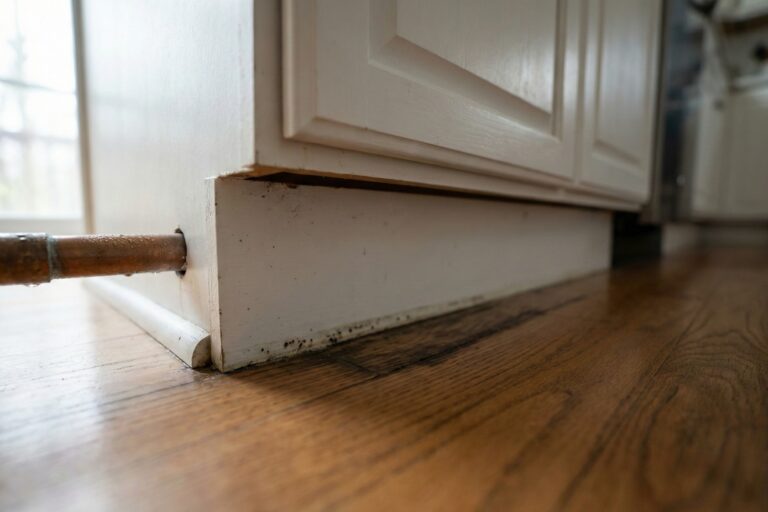
A slow kitchen leak can quietly grow mold, trigger real mold health risks, and open the door for exaggerated bids and confusing insurance advice. This guide shows you how to protect your family’s lungs and your wallet with a clear kitchen mold action plan and scam-proof checklist.
From Panic To Peace: A Bathroom Mold Cleanup Story In Victoria
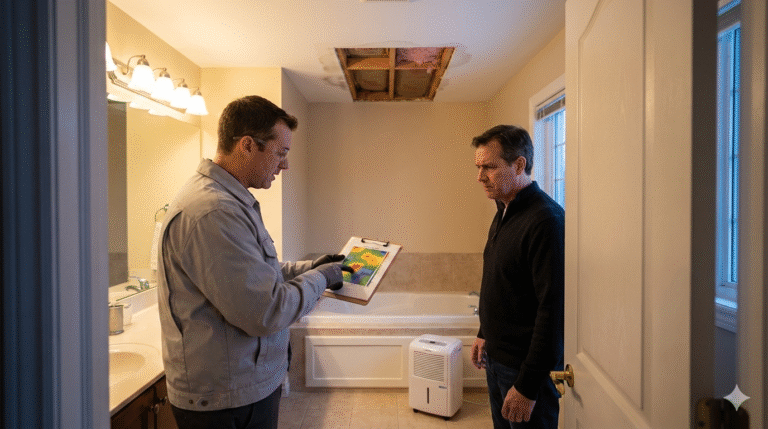
A simple upstairs bathroom overflow turned into hidden mold, scary health questions, and a bloated five-figure estimate. This case study walks through what really happened, how the bathroom mold remediation process should look, and the money-saving choices that kept one Victoria family from overpaying.