
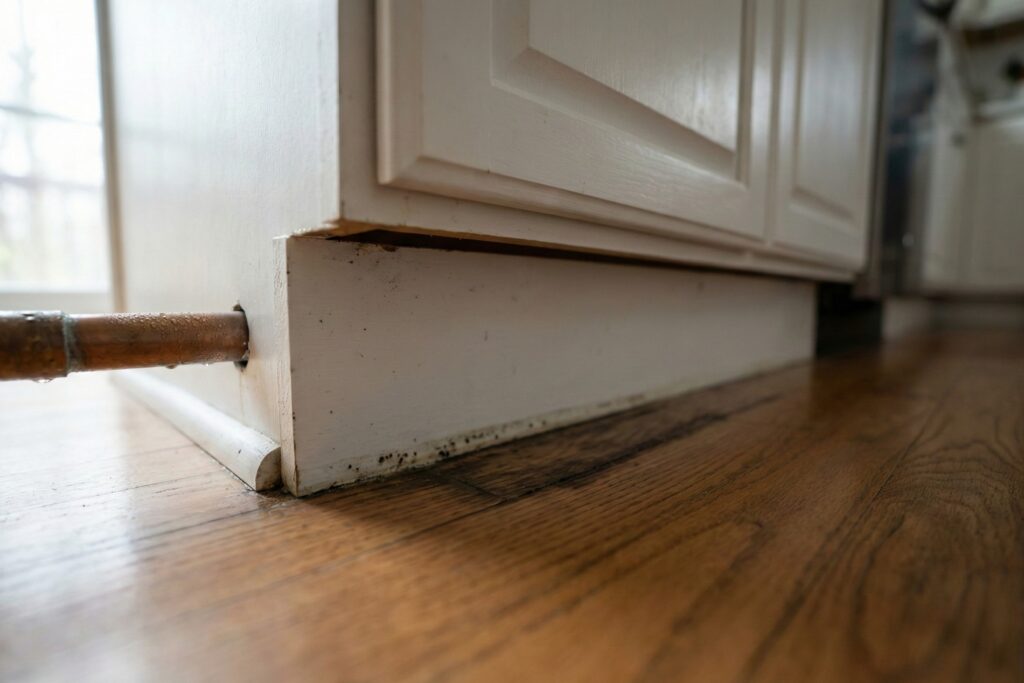
If you discover a slow drip under your kitchen sink, you probably worry first about the cabinet finish and the repair bill. What most people do not see right away is how quickly that moisture can turn into mold health risks that contractors and insurers may use to justify expensive, confusing work.
In lake-humid neighborhoods near Lake Minnetonka, it is common for a tiny leak behind cleaning supplies to sit for weeks. By the time you notice a sour odor or a soft spot in the cabinet floor, you might already be getting scare stories about “toxic mold” and pressured to sign a big mold remediation contract on the spot.
This guide pulls back the curtain on how a simple kitchen leak can affect your health, how some vendors quietly inflate mold bills, and how a clear checklist helps you protect both your lungs and your budget.
Mold health risks after a small kitchen leak
A damp cabinet base is not just a cosmetic issue. Warm, enclosed spaces under sinks give mold, bacteria, and dust mites everything they need to thrive. That can irritate airways, worsen asthma, and contribute to headaches or fatigue long before you see a dramatic black stain.
How fast mold can grow under kitchen cabinets
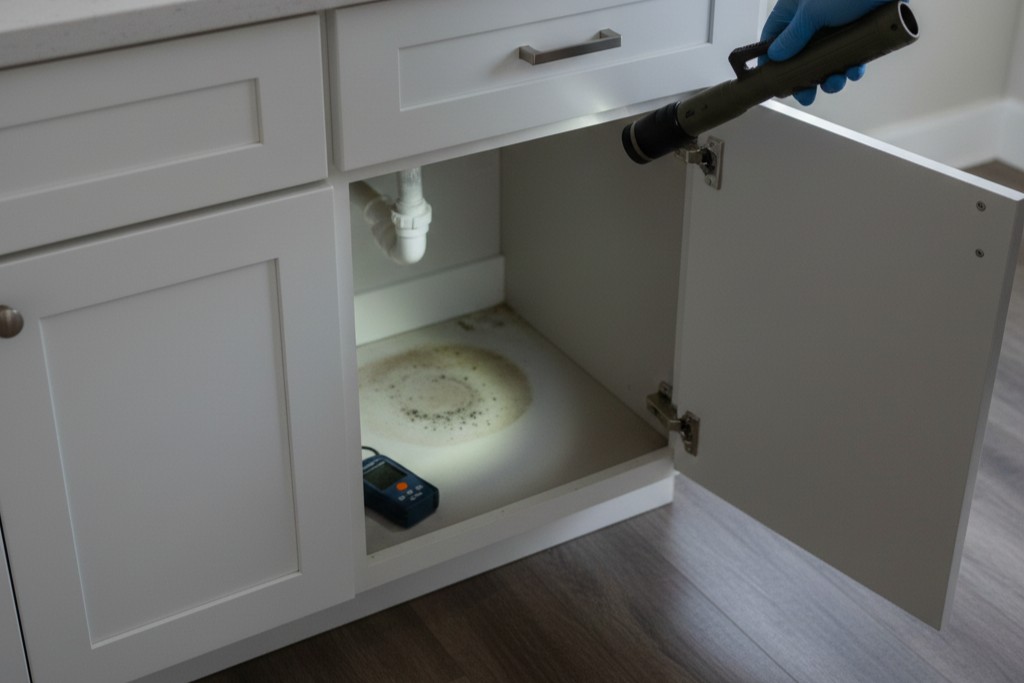
Once a supply line or drain connection starts weeping, the cabinet floor often stays damp even when the room feels dry. Particleboard and MDF soak up water like a sponge, and the underside of the cabinet rarely gets air circulation. In many homes, mold can start colonizing these materials within one to two days of continuous moisture, especially during warm, humid weather.
In a typical Minnetonka-area kitchen, a slow leak can drip onto the cabinet floor, soak into nearby baseboard, then wick into drywall behind the sink. You might first notice a musty odor when you open the doors or find that stacked paper products feel limp. By that point, mold spores can already be growing on the back of the cabinet floor, the wall surface behind it, or the unpainted underside of the countertop where steam and moisture collect.
If that area stays damp, spores can become airborne every time the cabinet door closes or the dishwasher runs, spreading into the air you breathe. Even if the visible patch looks small, the real surface area coated with growth can be much larger on the hidden sides of materials.
Who is most at risk from mold in a damp kitchen
Not everyone reacts to mold in the same way. People with asthma, allergies, chronic lung disease, or weakened immune systems are more likely to notice symptoms when a kitchen cabinet starts harboring growth. According to CDC guidance on mold and health, exposure can cause nasal stuffiness, coughing, wheezing, and skin or eye irritation, and it can trigger asthma attacks in sensitive individuals. This helps you understand why your household might feel lousy even when the damage looks minor.
Small children and older adults often spend more time at home and may be closer to ground-level air where heavier spores settle. Pets can track moisture and moldy dust from that cabinet onto nearby rugs. If anyone in the home notices increased congestion, sneezing, or coughing that improves when they are away from the house for a few days, the combination of dampness and mold deserves serious attention, not just an air freshener.
How contractors and insurers quietly inflate mold bills
Once you mention the word “mold,” you enter one of the murkiest corners of home services and property insurance. The health risk is real, yet some contractors and third-party testers exploit fear to push oversized demolition jobs, while some insurers lean on strict mold limits that pressure you into choices that are either unsafe or unnecessarily expensive.
Common scare tactics around “toxic mold”
One common tactic is to label any dark growth as “toxic black mold” and imply that your entire kitchen must be gutted immediately. In reality, many indoor molds can irritate the respiratory system, and reputable sources such as the Lawrence Berkeley National Laboratory note that dampness and mold of many kinds are linked with increased asthma attacks, cough, and other respiratory symptoms, not just a single species. A summary of these findings is available in a review of health risks from indoor dampness and mold. The key point is that the moisture problem and total affected area matter more than dramatic labels.
Another scare tactic is to wave a lab report in front of you without context. Air samples often pick up mold spores that are present in normal outdoor air. Unscrupulous vendors may highlight Latin names and “mycotoxin” language to push costly fogging, unnecessary chemical treatments, or full cabinet removal, even when a smaller, well-contained project would address the risk. If no one is measuring moisture in materials or explaining why specific surfaces must be removed, the recommendations may be more about revenue than safety.
Insurance coverage traps that push you to overpay
Most homeowner policies treat mold differently from clean water damage. There may be a low mold sublimit that caps what the carrier will pay once growth is documented. Some contractors know this and design a scope that conveniently spends every dollar of the mold coverage, regardless of whether all that demolition is truly necessary for your situation. You could end up with a larger share of out-of-pocket costs for rebuilding than you expected.
On the other side, some adjusters push minimal mold work that focuses on visible staining and ignores hidden damp materials. That can leave you with lingering odor and health concerns, forcing you to hire someone else later without coverage. The safest approach is to ask detailed questions about which line items are categorized as water mitigation versus mold remediation, how the contractor will prove materials are dry, and what alternatives exist if you choose a more conservative or more comprehensive plan.
Step-by-step action plan for safe, sensible cleanup
When your kitchen cabinet is damp, you need a plan that respects health concerns but does not automatically hand a blank check to the first company that mentions mold. The following steps help you stabilize the situation, protect sensitive family members, and make clear-eyed decisions about which work you truly need.
Steps 1–3: Stabilize, document, and triage the damage
Step 1 is to stop the water source safely. Shut off the fixture or main water supply if necessary, then place a pan or towel to catch remaining drips. If the leak is active and you cannot locate the valve, call a plumber or emergency service quickly so the cabinet does not stay wet for days.
Step 2 is to document everything before you move items. Take wide, medium, and close-up photos of the cabinet, floor, and adjacent walls, including any discolored areas, swollen trim, or visible mold. Capture the underside of the sink, supply lines, and drain connections. This documentation supports an insurance claim and also helps you compare future contractor estimates to the actual conditions.
Step 3 is to triage the area. Remove stored items and dispose of clearly contaminated paper goods. Gently lift the front edge of the cabinet floor or toe-kick if it is already loose to see whether the subfloor or wall behind shows staining. If you have a basic moisture meter, take readings along the baseboard and the floor in front of the sink so you know whether moisture has spread beyond the cabinet box itself.
Steps 4–6: Decide what you can safely DIY and what to hire
Step 4 is to assess scope and health factors. Area size, material type, and household health conditions all matter. As a general educational guideline, the U.S. Environmental Protection Agency notes that small areas of mold on hard surfaces can often be cleaned by homeowners using detergent and water, while porous materials that stay moldy usually need removal rather than surface scrubbing. You can review these principles in more detail in the EPA’s mold cleanup advice for homes. If the affected area is larger than a few square feet, spreads behind cabinets, or involves vulnerable occupants, leaning on a professional is safer.
Step 5 is to get at least two written opinions that include line-item pricing. Ask each contractor how they will control dust, what containment they plan to use, and how they will verify materials are dry at the end. Be cautious of anyone who refuses to provide a detailed scope or pressures you to sign an “assignment of benefits” that hands them control over your insurance claim.
Step 6 is to phase the work where possible. In some situations, it may be reasonable to start with targeted removal of the cabinet floor and any obviously damaged drywall, followed by aggressive drying and a re-evaluation. This staged approach can keep costs in check while still addressing the main risk. If a company discourages any discussion of options, that is a sign to get another opinion before moving forward.
When to call a pro in Minnetonka Beach
Some kitchen leaks truly are small maintenance issues that you can address with a plumber, careful drying, and monitoring. Others justify bringing in a restoration team that handles both the moisture and the mold risk in a controlled way. Knowing where that line sits is key to protecting both health and budget in the Minnetonka shoreline climate.
You should strongly consider calling a professional when the damp or moldy area extends beyond the cabinet into adjacent walls or flooring, when you can see soft or crumbling materials, or when the odor is strong even after the leak is repaired. If anyone in your home has asthma, allergies, lung disease, is pregnant, or has a weakened immune system, having an expert review the situation is especially important.
A local company like Optimized Restoration can create a scoped plan that includes moisture measurements, appropriate containment, and clear documentation for your insurer. The right contractor will explain what must be removed for health reasons, what might be saved with careful drying, and how the cost will be split between water mitigation and mold remediation categories so you are not surprised later.
Kitchen mold scam prevention checklist
1. Ask every contractor to show you where moisture is still present, not just where staining appears. No moisture measurements or vague answers are a red flag.
2. Request a written scope of work with quantities and locations. Avoid estimates that lump everything under a single “mold remediation” line without explaining which cabinets, walls, and flooring will be affected.
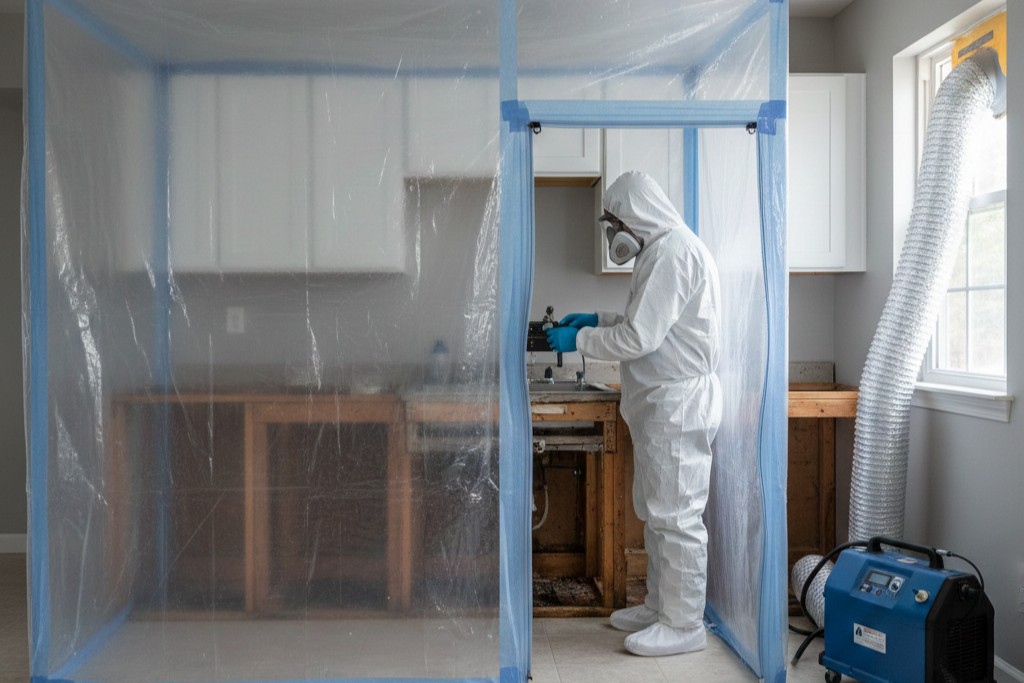
3. Insist on containment details for any work that opens walls or removes cabinets. Floor-to-ceiling plastic, sealed edges, and HEPA filtration should be part of the plan rather than an optional upgrade.
4. Be cautious of dramatic language about “toxic mold” that does not come with a clear explanation of the moisture source and how the plan will keep materials dry long term.
5. Call your insurance carrier before signing major contracts. Ask how your policy handles water damage versus mold, what limits apply, and whether they need to approve the scope in advance.
6. Get at least one alternative estimate that explores a more conservative and a more comprehensive option. Comparing two different approaches often reveals where fear-based upselling is happening.
7. Keep copies of all photos, invoices, and moisture readings. This paper trail helps if you need to challenge charges later or show that you followed reasonable steps to protect your home and health.
FAQ: Kitchen leaks, mold, and health concerns
How long after a kitchen leak does mold become a health concern? In many homes, mold can start growing within one to two days on damp cabinet materials, especially in warm weather. People with asthma or mold allergies may notice symptoms like congestion, coughing, or wheezing early on. The longer materials stay wet, the more spores and musty odor can build up in your indoor air.
Is a small patch of mold under my sink really dangerous? A small patch on a hard, easily cleaned surface is often manageable if you are otherwise healthy and the source of moisture is fixed quickly. However, even small areas can be a problem for people with asthma, allergies, or weakened immune systems, and mold often extends farther on hidden surfaces than what you see. If you feel unwell at home or the damage involves porous materials, it is wise to be cautious and get informed advice.
Will insurance pay for mold cleanup after a kitchen leak? Most policies cover sudden water damage but place strict limits on mold-related work. Your carrier may pay for drying and removal of wet materials while capping what they contribute toward specialized mold remediation. The best way to avoid surprises is to ask your insurer in writing how they categorize each part of the job and to make sure contractor invoices clearly separate water mitigation from mold-specific line items.
Recommended articles

Mold Liability After Water Damage In Orono: Who Pays When A Finished Basement Grows Mold
A slow seep in a finished basement can turn into a moldy mess and an argument over who pays. This guide walks you through mold liability after water damage, how to sort out responsibility between owners, tenants, HOAs, and contractors, and what to document so you stay in control instead of stuck in a feud.
From Panic To Peace: A Bathroom Mold Cleanup Story In Victoria
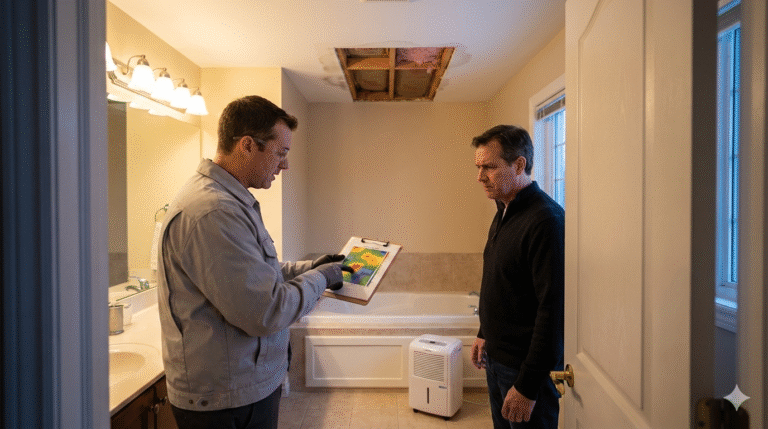
A simple upstairs bathroom overflow turned into hidden mold, scary health questions, and a bloated five-figure estimate. This case study walks through what really happened, how the bathroom mold remediation process should look, and the money-saving choices that kept one Victoria family from overpaying.
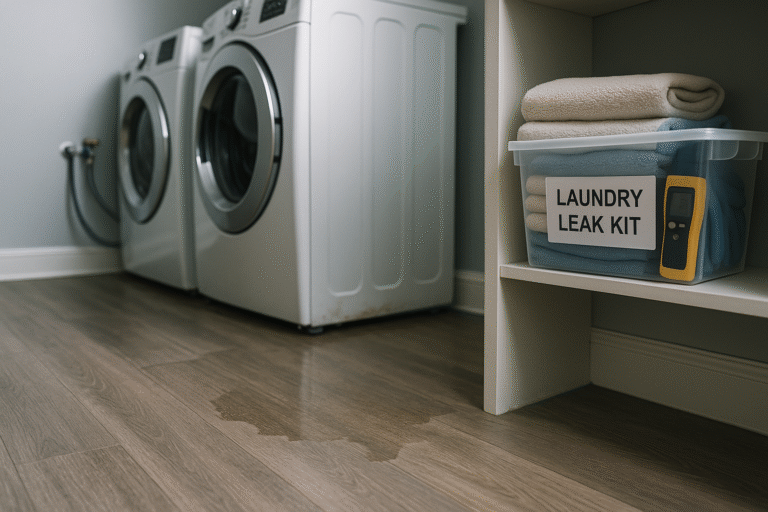
Laundry Room Mold Survival Guide for Minnetonka Beach Homeowners
A washing machine leak in a small laundry room can quietly turn into stained trim, musty smells, and insurance headaches. This guide walks you through laundry room mold prevention, from hose inspections and humidity control to a practical “survival kit” and checklist that keep you in control when something goes wrong.