What Basement Air Problems Look Like In Older Houses
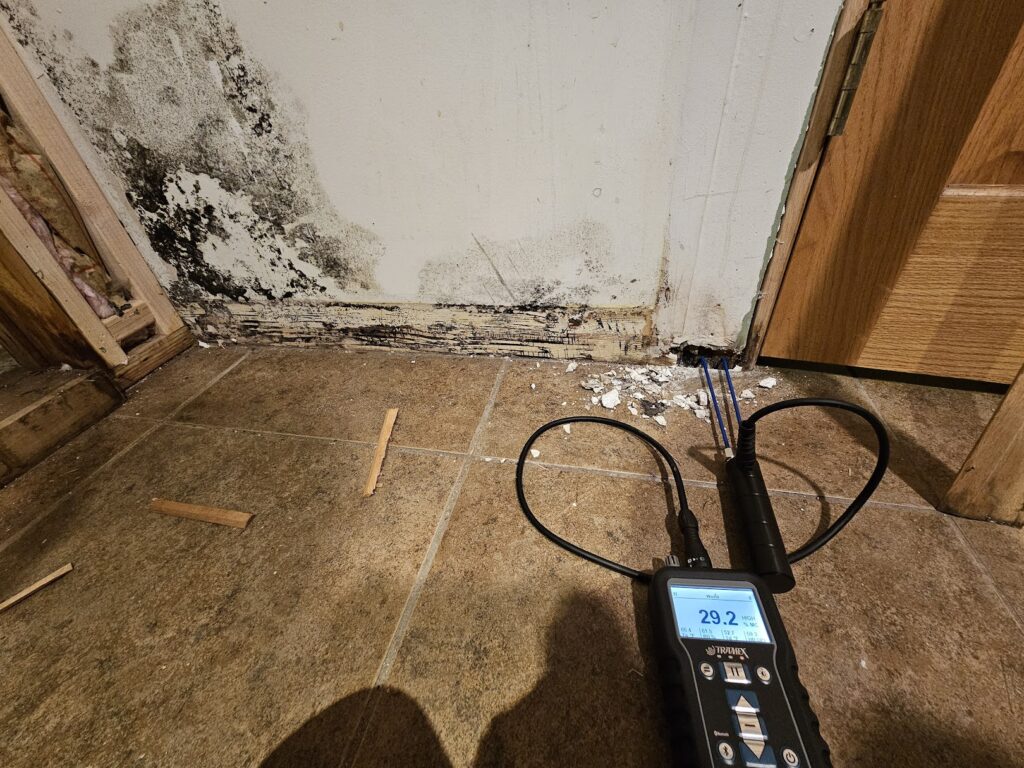
Basements in older houses commonly present a mix of clues that the air is not ideal. You may notice a persistent musty odor, damp carpet or insulation that never feels dry. Family members might get frequent nose or throat irritation, headaches, or seasonal allergy flare ups that seem worse indoors. In older construction, foundations often predate modern waterproofing. Crawl spaces or slab edges may have small cracks and unsealed penetrations that let soil moisture and soil gases into the space. Those factors combine with limited natural ventilation to let pollutants concentrate.
Basement issues are rarely single causes. Moisture often sits at the root. That moisture helps mold and dust-mite populations grow. It corrodes ducts and invites pests. It also changes how the house “breathes.” Heat systems, especially in colder months, create a stack effect that can pull basement air up into living rooms and bedrooms. Because older homes may have return air pathways that route through the basement, a basement problem can become a whole-house issue.
Practical signals to watch for include visible staining on foundation walls, peeling paint, blistering on concrete, persistent damp smell, and higher than normal relative humidity readings on a hygrometer. These are early warnings that deserve a calm, strategic response—testing, source control, ventilation and, if needed, professional mitigation.
Why Basements In Older Homes Are Different
Older homes were built with different priorities and materials. Many foundations were poured before modern membrane waterproofing or foundation drainage systems became common. Exterior grading may have shifted over decades so that soil now slopes toward the foundation. Homes converted to living space years after construction may have had insulation or finishes added without addressing the original moisture profile. All of this matters because it changes the sources and movement of air and moisture.
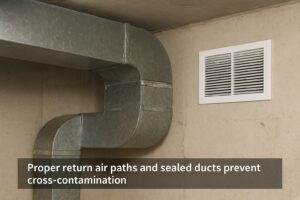
Thermal and moisture dynamics also matter. In cold months, warm indoor air rises and basements get negative pressure. That negative pressure draws soil gases and cold damp air through gaps. In warm months, humid air can drive condensation on cool surfaces like ductwork and foundation walls. Ductwork installed in basements decades ago is often undersized, uninsulated or unsealed. If return ducts run through the basement and have leaks, the HVAC system may be cycling basement air around the house. This is why older-home basements are different: they are a crossroads of moisture, soil contact and airflow pathways that modern builds avoid.
Neighborhoods with older housing stock often share the same soil and drainage conditions. Whether you live near a river backwater, an older street with mature trees, or a block with historic houses, local variations in grading, tree root systems and municipal drainage patterns will change how water interacts with foundations. That makes a local approach—inspecting your yard as well as your basement—important.
Common Pollutants And Health Considerations
Basements can concentrate several pollutant types. Biological pollutants such as mold spores and dust-mite fragments thrive where humidity is elevated. Chemical pollutants include volatile organic compounds from paints, solvents, stored products, or older building materials. Soil-gas contaminants—most importantly radon—enter through slab cracks, sump pits and joints. Radon is a colorless, odorless radioactive gas produced by natural soil breakdown; long-term exposure increases lung cancer risk.
Immediate health signs are usually mild irritation: watery eyes, sneezing, cough, throat irritation, and headaches. Over time, poorly controlled indoor environments can aggravate asthma and other respiratory conditions. That said, detection is practical. Visible mold, repeated allergic reactions inside the home, or a radon test showing elevated levels indicate steps are warranted. Start with simple measurements: a hygrometer to log relative humidity, visual inspection for mold or water stains, and a radon test kit to assess soil-gas exposure. Those measurements convert worry into actionable data.
EPA’s Inside Story guide explains how ventilation, moisture and pollutant sources interact and offers straightforward actions homeowners can take. This is a practical reference for basic IAQ steps.
Step-By-Step Assessment You Can Do This Weekend
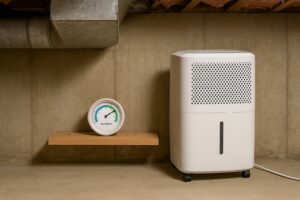
Begin with a short checklist and simple tools. First, place a reliable hygrometer in the center of the basement for at least 72 hours. Log daily minimum and maximum readings to see patterns. Aim for 30–50 percent relative humidity in most seasons; Minnesota guidance flags persistent humidity above 60 percent as problematic.
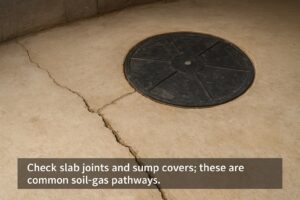
Second, do a visual sweep. Look for white powdery efflorescence on foundation walls, blistered paint, dark staining, peeling adhesives or soft insulation. Smell the space: a musty or sour odor often indicates hidden moisture. Inspect ducts for obvious rust, loose connections or condensation on the surface. If you have a sump pit, check whether it is sealed—an open sump can be a direct pathway for soil gases. Take photos and notes; they help pros diagnose issues later.
Third, do a radon test. Short-term kits are affordable and widely available. Place the kit in the lowest occupied area and follow the kit instructions; winter tests often show higher levels due to home pressurization. Finally, check exterior drainage: downspouts should extend away from the foundation and soil should slope down away from the house at least 6 inches over 10 feet where possible.
Practical Fixes That Give Big Results
After you collect data, prioritize fixes that reduce moisture and stop pollutant entry. Start with the exterior: extend downspouts, correct grading, and keep planters and mulch away from foundation walls. Inside, a correctly sized dehumidifier that can handle the basement’s cubic footage is one of the fastest ways to lower humidity and break the mold cycle. Run it during humid months and empty or plumb it according to manufacturer guidance.
Improve ventilation and air exchange. If your HVAC system lacks a proper lower-level return, consider adding a dedicated return register or a balanced mechanical ventilator with filtration. Energy-recovery ventilators help bring fresh air without major energy penalties. For duct issues, sealing visible seams with approved foil tape and insulating ducts that pass through cold areas will reduce condensation and dust infiltration. When finishing or remodeling, choose moisture-resistant building materials and low-emission paints and adhesives to reduce VOC contribution.
For radon above action levels, create a mitigation plan. Sealing cracks is useful but not sufficient; an active subslab depressurization fan system that vents outdoors is the standard fix. Licensing rules in the state require qualified mitigation specialists for design and installation; check local licensure rules when hiring a contractor.
When To Call A Pro In Minneapolis
Call a licensed professional if tests show problems you cannot resolve with surface fixes. Examples include a confirmed radon reading above recommended action levels, recurrent moisture despite exterior drainage fixes, or visible mold larger than a small patch. In Minneapolis, radon mitigation and certain waterproofing work are regulated; use a licensed radon mitigation contractor for subslab systems and a licensed structural contractor for foundation repairs. If your HVAC system appears to be circulating damp basement air or if ducts are hidden and suspected of major leakage, get a contractor who can perform a duct leakage test and supply/return evaluation.
Also call a pro if health symptoms persist. If family members report repeated respiratory symptoms that improve when they leave the home, a thorough, professional indoor air assessment that includes radon, moisture mapping, and HVAC inspection is appropriate. Licensed professionals can provide proven fixes and documentation that you or future buyers will appreciate. For Minneapolis homeowners, local pros understand how seasonal freeze-thaw cycles, snowmelt and municipal drainage contribute to basement moisture and can suggest solutions tailored to neighborhood conditions.
Simple 7-Step Checklist To Improve Your Basement Air
- Place a hygrometer and record RH for 72 hours.
- Perform a visual sweep for stains, mold, condensation and take photos.
- Run a short-term radon test in the lowest occupied space.
- Extend downspouts and correct exterior grading where needed.
- Install or run a correctly sized dehumidifier until RH stabilizes below 50 percent.
- Seal visible slab or joint cracks with masonry sealant; keep the sump pit covered.
- Clean or upgrade HVAC filters and inspect ducts for leaks or condensation; hire a pro if ducts are hidden and suspect.
FAQ
How often should I test my basement for radon?
Test every 2–5 years or after major changes like finishing the basement, altering the HVAC system, or significant foundation repairs. Seasonal factors matter; winter tests often show higher levels due to closed homes and stack effect.
Will a dehumidifier fix mold?
A dehumidifier controls humidity and helps stop mold growth, but it does not remove existing damage or fix exterior water entry. For visible mold over larger areas, professional remediation plus source control is needed.
Is it safe to finish a basement in an older house?
Yes, if you address moisture, ventilation, and soil-gas before finishing. Use moisture-resistant materials and include mechanical ventilation or ensure the HVAC is balanced to avoid trapping contaminants.
Resources
- EPA — The Inside Story: A Guide to Indoor Air Quality — why this helps: Practical, homeowner-focused guidance on ventilation, moisture control and pollutant sources.
- Minnesota Department of Health — Radon Data and Resources — why this helps: State-level radon statistics, testing programs and guidance specifically for Minnesota.
- University of Minnesota Extension — Controlling Moisture Problems in Your Home — why this helps: Local climate and construction context with practical moisture-control steps for older homes.
Conversion & Distribution Assets
If you want a quick, no-pressure check of your basement’s measurements and photos, we’re on standby to review them and recommend the next steps. Reach out for a free intake call.