
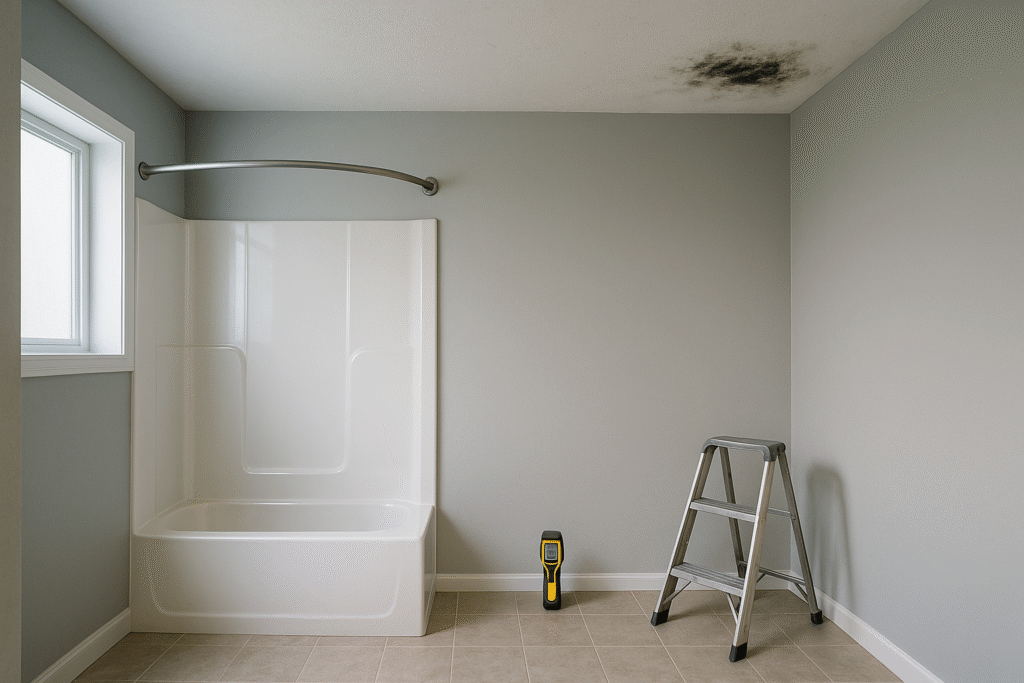
That little gray smudge on your bathroom ceiling does not look like a courtroom problem. Yet if that “small bathroom mold spot” spreads behind the paint, affects indoor air, or gets ignored in a rental or real estate deal, the fallout can be much bigger than a cleaning bill. Many homeowners start with DIY bathroom mold and only think about liability after there is a complaint, a home inspection, or a sick family member.
Understanding what is actually happening in that damp bathroom corner is not just about cleaning technique. It is about what lives in the air you breathe, how moisture moves through walls and ceilings, and what your responsibilities are if anyone else spends time in that space. For Minneapolis area homeowners, cold winters, ice dams, and long shower seasons make bathroom mold a repeat offender.
Why DIY Bathroom Mold Looks Safer Than It Is
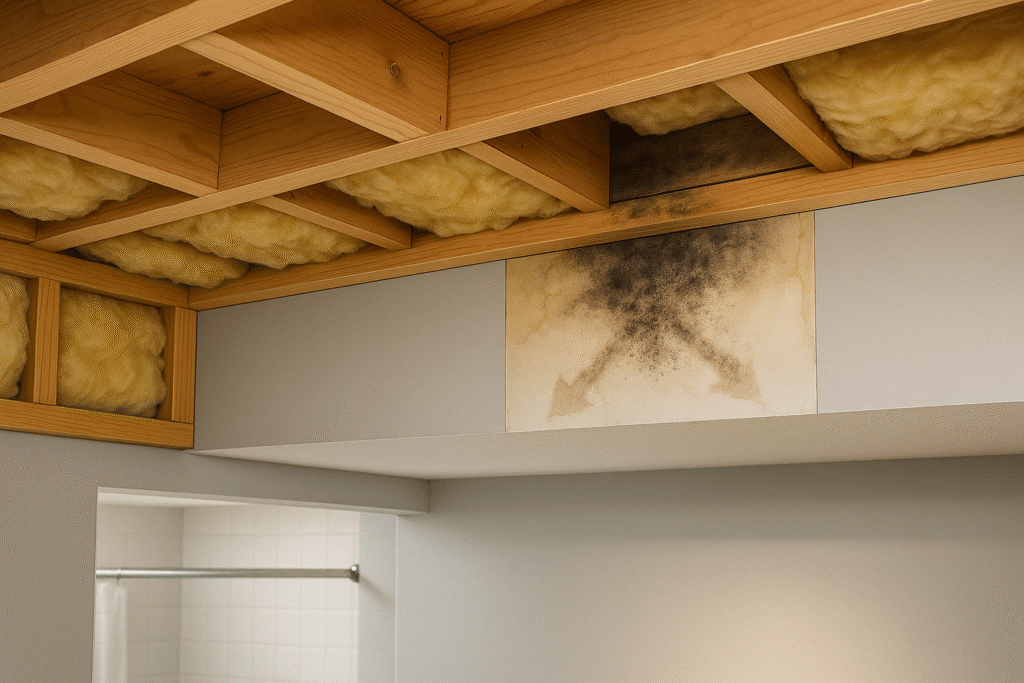
The first trick bathroom mold plays is visual. You see a patch the size of a dinner plate and automatically think in surface area. A quick wipe with a store cleaner, maybe a little repainting, and it feels solved. What you do not see is whether that stain is the visible edge of a larger patch of mold in the drywall paper, insulation, or framing above.
Moisture in bathrooms rarely stays exactly where it starts. Steam accumulates at the ceiling, bath fans with weak ducts push damp air into attic cavities, and small roof or ice dam leaks can travel along framing before they show up as a stain. The spot you see over the shower might be ten percent of the total growth above the ceiling.
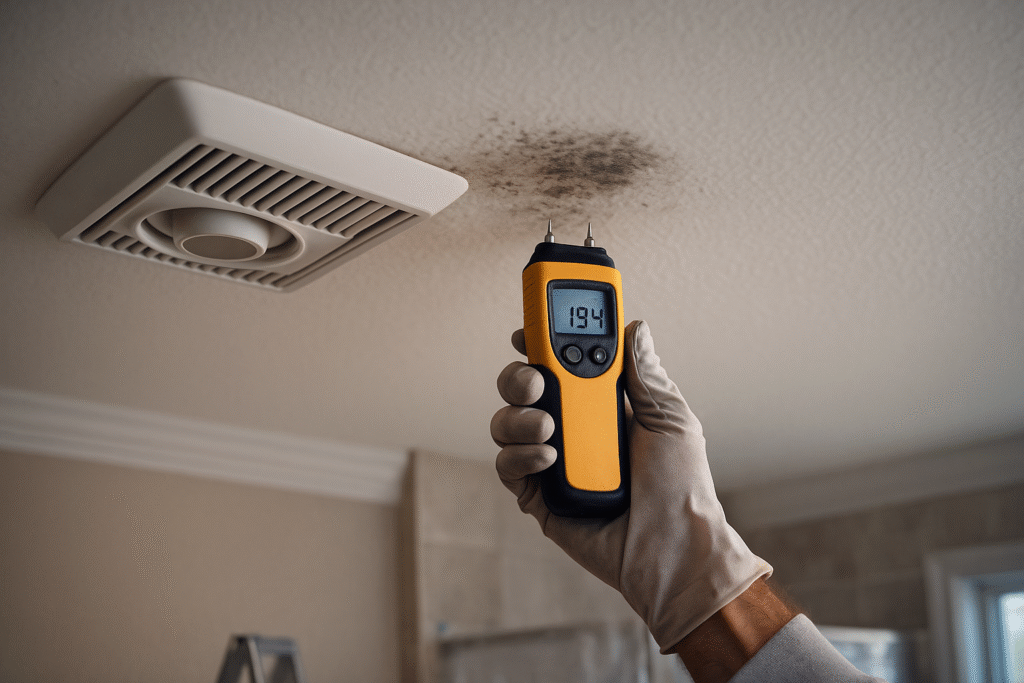
[IMAGE 2: horizontal 3:2 close-up medium shot from a few feet away at slightly low angle, showing a bathroom drywall ceiling with a small dark mold patch and faint staining near an exhaust fan trim ring, with a gloved hand holding a pin type moisture meter to the surface; walls are painted light beige with white trim and a glimpse of ceramic tile in the shower, floor is out of frame; damage appears subtle and mostly dry on the surface but the composition focuses on investigation rather than cleaning; soft afternoon window light from the right with a neutral-cool documentary color grade, mild background blur so the stain and meter are in crisp focus; a small step ladder and painter’s plastic are soft shapes in the background; style is photo-realistic, documentary style, natural color, no visible logos, and no text or on-screen captions.]
Cleaning chemicals and paints also hide more than they solve when they are used as the only strategy. Many DIY approaches rely on a quick spray, a wipe, and a fresh coat of paint. That can reduce surface staining but it does not remove mold fragments or spores embedded in porous materials. If the moisture source remains, the “fixed” area often reappears within weeks, sometimes in more places than before.
There is also a psychological trap. Because mold is common in bathrooms, it is easy to treat it like soap scum. That mindset can lead to shortcuts that increase aerosolized spores, such as dry brushing or sanding without protection. In a small, poorly ventilated room, that may increase exposure for anyone with asthma, allergies, or other respiratory issues who uses that bathroom each day.
How Hidden Moisture Becomes A Health And Liability Problem
Bathroom mold is not only about ugly spots. Mold grows where materials stay damp, and that dampness often signals a bigger building problem that affects the entire home. Leaky plumbing in a wall cavity, a disconnected bath fan duct in the attic, or air leaks around a shower light can all feed mold out of sight long before you see the first stain.
Health agencies note that damp and moldy environments can trigger respiratory symptoms in sensitive people, including stuffy nose, coughing, and wheezing, and can be especially serious for those with asthma or weakened immune systems. The Centers for Disease Control and Prevention summarizes these risks in its general guidance on mold and health, which is a useful reference if someone in your household is reacting to a “musty” bathroom even when it looks clean on the surface. See the CDC overview on mold and health for more detail on how dampness and spores affect people.
From a legal point of view, hidden moisture raises questions about what you knew or should have known. If you are a landlord, repeated reports of black spots or musty smells around a bathroom can signal a duty to investigate and repair underlying moisture, not just repaint. If you plan to sell, past water problems and mold cleanup efforts may be something you are expected to disclose, especially if there were ongoing leaks or professional remediation.
Liability questions tend to surface when someone else is involved. A tenant complains of breathing problems and points to bathroom mold. A buyer’s home inspector documents staining above a shower and recommends “further evaluation.” An insurance adjuster asks whether mold spread beyond a small area because the initial leak was not fully repaired. In those moments, being able to show that you understood the moisture issue and followed reasonable cleanup practices can matter more than how “small” the stain looked at the start.
What A Professional Mold Remediation Process Really Involves
Many homeowners only see the last ten minutes of a professional mold job. They see clean new drywall and fresh paint and assume a contractor simply cut out the bad piece and patched it. In reality, a careful mold remediation process is a series of controlled steps that start long before any cutting happens.
Assessment And Documentation Before Any Demo
For a bathroom ceiling spot, a professional will usually begin with questions and measurements rather than tools in the wall. They will ask how long the stain has been present, whether it changes with weather or shower use, and whether there have been past leaks from plumbing or roofing. Next comes moisture mapping with tools like pin and pinless meters and sometimes infrared cameras, to confirm how far dampness extends beyond what you can see.
Every finding is typically recorded with photos and notes, including material types and suspected moisture sources. In a Twin Cities bathroom, that might include checking an exterior wall for winter condensation, inspecting the attic side of the bath fan duct, or probing around a skylight or roof valley that can trap snow. This documentation stage is not just technical. It is the evidence a homeowner may later rely on if there is an insurance claim, a tenant dispute, or buyer questions about whether the problem was handled properly.
Containment And Protection Around The Bathroom
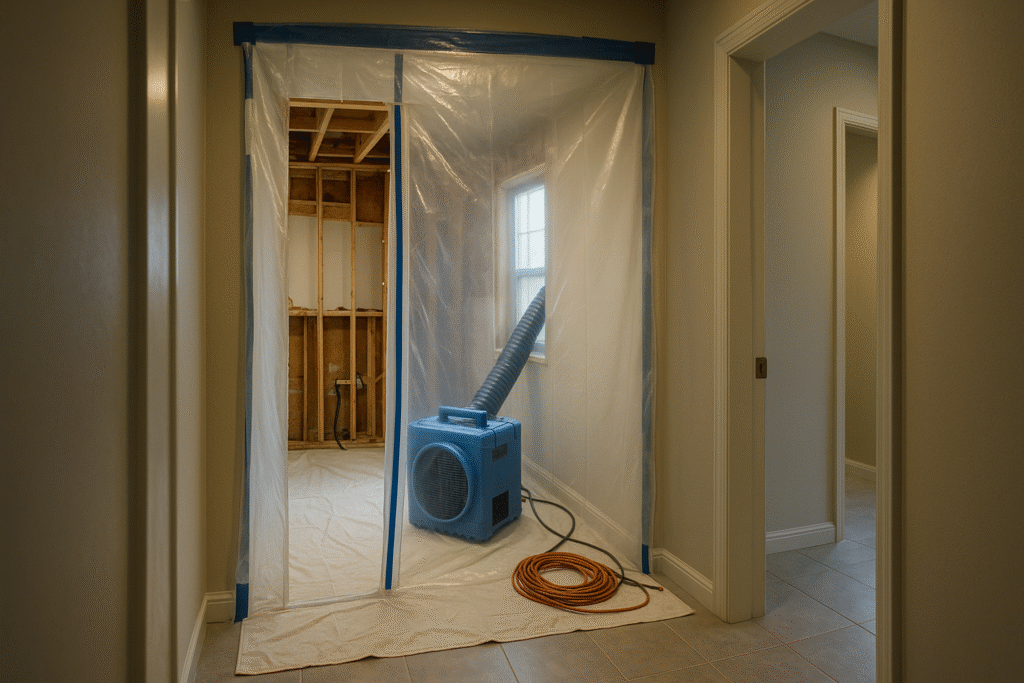
Once the scope is understood, a professional team sets up containment to prevent mold fragments and dust from spreading into the rest of the home. In a bathroom, that often means floor to ceiling plastic at the doorway and over any open shelving, with a zipper door for access and seams carefully taped at the ceiling and floor. A HEPA filtered negative air machine is ducted to the outdoors so that any disturbed spores are pulled out of the work zone instead of drifting down the hallway.
Inside the containment, surfaces that will stay are protected. Plastic may cover the vanity, tub, and toilet. Drop cloths control dust on the floor. Workers wear appropriate protective equipment such as full body suits, gloves, and respirators so they do not track debris into the rest of the home. All of this setup takes time and explains why a professional job costs more than a bottle of cleaner. It is also part of how a company like Optimized Restoration reduces risk for property owners who need to show that the work followed widely used industry practices.
Removal, Cleaning, And Drying
With containment in place, the actual removal begins. Instead of randomly cutting out a patch, professionals usually mark cuts along the next framing line and remove drywall in controlled sections, bagging debris in the work area before it leaves the containment. Any visibly mold impacted insulation or trim is removed as waste, while framing is cleaned with a combination of HEPA vacuuming and damp wiping.
Drying is just as important as physical removal. If the moisture source is an active leak, it must be repaired or stabilized before the area is closed. Air movers and dehumidifiers may be used in or near the bathroom to bring materials back to acceptable moisture levels. On small jobs, drying can often be completed within a day or two, but professionals will verify with meters rather than guessing based on how things feel.
Clearance And Paper Trail
When materials are clean and dry, the containment comes down and rebuild can start. For a bathroom ceiling that may mean new drywall, primer, and paint, matched as closely as possible to the existing finish. In some cases, especially in rentals or larger incidents, a third party assessment or air sampling may be recommended to confirm that the space is ready to go back into regular use.
The final deliverable is the paper trail. Homeowners should expect a written description of the moisture source, the area that was opened, the materials removed, the cleaning methods used, and any test or moisture readings. That file can be shared with an insurer, a tenant, or a future buyer to show that the problem was not simply painted over. It is one of the key differences between professional remediation and improvised DIY work when questions arise later.
DIY Cleanup Steps For Truly Small Low Risk Spots
Not every bathroom mold patch requires a full crew and equipment. For very small areas on hard, non porous surfaces, with no sign of ongoing leaks, a homeowner may be able to handle cleanup safely as part of regular maintenance. Federal guidance suggests that areas under about 10 square feet, roughly a three foot by three foot section, can often be addressed by occupants when moisture is controlled and there are no significant health concerns in the household. The EPA mold cleanup guide for homes outlines this size based approach in more detail.
If your bathroom spot fits that description, a cautious DIY approach should still treat mold as more than simple dirt. At minimum, use disposable gloves, eye protection, and at least a quality mask, and keep other family members out of the room during cleaning. Avoid dry brushing or sanding, which sends spores into the air. Instead, lightly mist the area, use a detergent solution on a disposable cloth or sponge, and change cloths as they become dirty so you are not just smearing contamination around.
Porous materials like unsealed drywall and acoustic ceiling tiles are harder to clean thoroughly. If mold has penetrated deeply or the surface remains stained and soft after cleaning, removal and replacement of that section is usually better than endless scrubbing. After cleaning and any replacement, run the bath fan, open a window if weather allows, and confirm that the surfaces actually dry. If the stain returns or spreads, or if you discover more growth behind trim or fixtures, it is time to stop DIY work and reconsider the scope.
Liability Risks When DIY Bathroom Mold Goes Wrong
Liability issues usually show up months or years after the first DIY cleaning. A tenant keeps emailing about a musty bathroom and you respond with another coat of paint instead of investigating the fan duct. A buyer’s inspector finds staining above the shower and asks whether the leak was ever fixed. A family member’s doctor suggests that an ongoing exposure in the home may be contributing to asthma flare ups.
In Minnesota, general guidance from public health agencies emphasizes that landlords are typically responsible for controlling moisture problems and addressing mold in rental housing, unless tenant behavior clearly caused the issue. That expectation fits within broader state rules that require rental units to be kept in reasonable repair and safe for occupants. Local resources, such as the Minnesota Department of Health’s materials on moisture and mold, are useful starting points for understanding these duties in more detail. See the MDH information on mold and moisture for examples of how landlords and tenants can address problems.
For owner occupied homes, the biggest legal exposure often comes when you sell. Many real estate forms ask about past water damage, leaks, and any mold cleanup that has been done. If you repeatedly had a “small” bathroom spot, did partial DIY work, and later discover that a larger area was affected, you may need to disclose that history. Buyers and their inspectors are more comfortable with a documented, properly repaired incident than with a surprise stain hidden behind fresh paint.
Insurance adds another layer. Some policies limit mold coverage, especially when damage is tied to long term leaks or deferred maintenance. If your DIY work makes a small, covered loss look like a long running problem, a claim could be harder to navigate. Good documentation of when the issue started, how it was addressed, and when a professional was brought in can protect you if coverage questions arise. When in doubt, it is wise to speak with a qualified attorney or insurance professional for advice on your specific situation.
When to call a pro in Minneapolis
There are moments when bringing in a professional is less about fear and more about smart risk management. Bathroom mold is one of those moments when certain red flags should push you away from DIY and toward a qualified remediation contractor. Size is one straightforward trigger. If the combined impacted area in your bathroom is larger than a few small patches, or if growth appears on multiple surfaces like ceilings, walls, and trim, the job is likely beyond what simple cleaning can safely handle.
Recurrence is another. If you have cleaned the same spot more than once and it keeps coming back, there is almost certainly an unresolved moisture source that needs deeper investigation. In Minneapolis homes, that might mean an ice dam above a bathroom on an exterior wall, a faulty vent that is dumping moist air into a cold attic, or a plumbing connection that only leaks when a neighboring unit uses water. These scenarios often require coordinated work between roofing, HVAC, plumbing, and remediation, which is difficult to manage as a solo DIY project.
Finally, consider who uses the bathroom and how the space is used in the broader property. If the bathroom serves a tenant, a childcare space, or a bedroom for someone with asthma or other respiratory issues, the standard of care should be higher. Calling a local contractor such as Optimized Restoration can provide a documented process, proper containment, and a clear record of what was done, which helps protect both health and legal interests. For urgent situations, many local firms maintain after hours lines for water and mold related emergencies.
Checklist: Quick Decisions For Bathroom Mold
This quick checklist helps you decide what to do when you first see a bathroom mold spot.
- Confirm size and location. Measure the visible mold and note whether it is on ceiling, walls, grout, or trim, and whether there are multiple patches.
- Look for moisture sources. Check for roof or plumbing leaks, poor fan performance, or visible condensation on windows and ceilings.
- Assess health sensitivities. Consider whether anyone using the bathroom has asthma, allergies, or immune issues that warrant extra caution.
- Decide if it fits “small area” guidance. If it is truly a small patch on a hard surface with no ongoing moisture, cautious DIY cleaning may be reasonable.
- Plan safe DIY or call a pro. If you proceed yourself, use basic protective gear and avoid sanding. If the area is larger or recurring, contact a remediation contractor.
- Document what you do. Take photos before and after, keep receipts, and note dates in case questions arise later from tenants, buyers, or insurers.
- Monitor for recurrence. Recheck the area over the next few weeks, and if staining or odor returns, stop DIY work and get a professional assessment.
FAQ: Bathroom Mold, Liability And Professional Help
Is It Legal To Clean Bathroom Mold Yourself?
In most homes, it is generally allowed to clean small areas of bathroom mold yourself, especially when you own and occupy the property. Laws do not usually prohibit reasonable DIY cleaning. The bigger question is whether your cleanup is effective and documented, particularly if tenants, buyers, or health professionals later raise concerns about how the problem was handled.
When Does Bathroom Mold Become An Emergency?
Bathroom mold is urgent when it grows quickly, covers a large area, or coincides with health symptoms such as breathing trouble, coughing, or worsening asthma. It is also urgent if the moisture source is active, such as a leaking pipe or roof that is soaking structural materials. In those situations, stopping the water and stabilizing the space with professional help is safer than waiting.
Do You Have To Disclose Past Bathroom Mold To Buyers?
Home sellers are often required to disclose known water damage, leaks, and significant past mold issues, although specific rules vary by state. If you had repeated bathroom mold, needed professional remediation, or opened up building materials to fix a leak, it is usually wise to discuss disclosure expectations with your real estate agent or a qualified attorney before listing the property.
Recommended articles

Mold Liability After Water Damage In Orono: Who Pays When A Finished Basement Grows Mold
A slow seep in a finished basement can turn into a moldy mess and an argument over who pays. This guide walks you through mold liability after water damage, how to sort out responsibility between owners, tenants, HOAs, and contractors, and what to document so you stay in control instead of stuck in a feud.
Kitchen Leak Mold Traps That Make Minnetonka Beach Families Overpay
A slow kitchen leak can quietly grow mold, trigger real mold health risks, and open the door for exaggerated bids and confusing insurance advice. This guide shows you how to protect your family’s lungs and your wallet with a clear kitchen mold action plan and scam-proof checklist.
From Panic To Peace: A Bathroom Mold Cleanup Story In Victoria
A simple upstairs bathroom overflow turned into hidden mold, scary health questions, and a bloated five-figure estimate. This case study walks through what really happened, how the bathroom mold remediation process should look, and the money-saving choices that kept one Victoria family from overpaying.